Commercial Scent Diffuser Placement and Servicing: A Guide for Property Teams

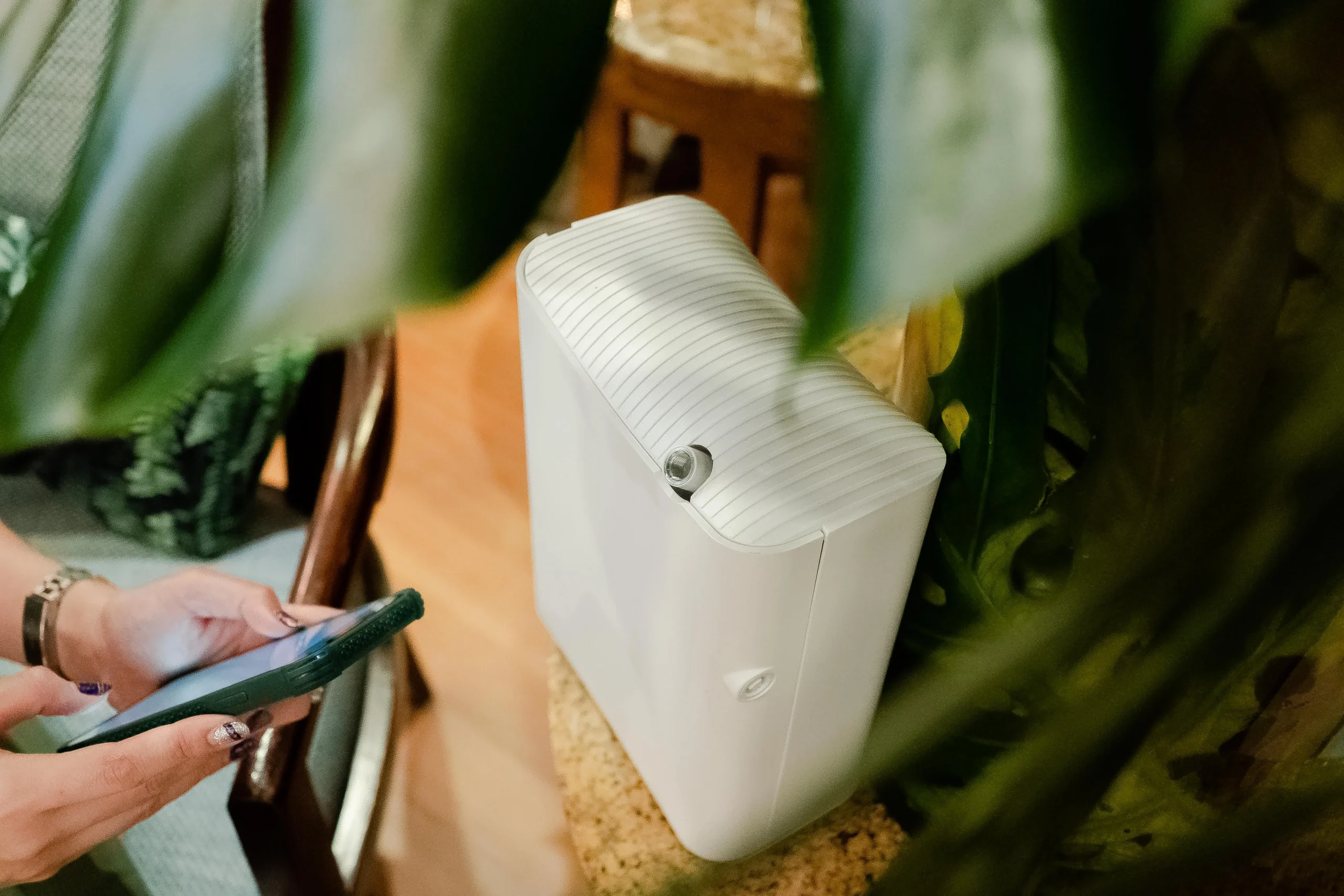
Where a commercial scent diffuser sits and how it is serviced decide whether a space smells consistent from week to week. As a starting point, place the unit where air moves through the areas people use, such as near entrances and main walkways, and away from direct draughts, heat sources and seating. Agree the exact spot with your air-conditioning (ACMV) contractor before anything is fixed in place. Servicing depends on the machine, the room and the foot traffic, so ask your provider for the schedule in writing.
The rest of this guide covers both, plus the questions property teams should ask before installation.
Where should a commercial scent diffuser go in a building?
Entrances, lobbies and main walkways are the usual starting points, because scent should reach people as they arrive and move through the space. The exact position depends on the unit, the ceiling height and the building’s air-conditioning, so confirm it with the installer and your ACMV contractor first.
Placement relative to vents varies. One approach puts the unit near return vents so the air-conditioning helps spread the scent. Another keeps it away from vents so the scent does not thin out too fast. Both can work, depending on the machine and the system, so no single rule fits every building.
Ventilation matters here. Singapore’s guidance on ventilation and indoor air quality recommends that building owners and facilities managers properly operate and maintain air-conditioning and mechanical ventilation (ACMV) systems. It refers to SS554:2026 for indoor air quality and SS553:2026 for air-conditioning and mechanical ventilation systems. This guidance concerns building ventilation and indoor air quality, not scent-machine placement. It is still a reason to involve the ACMV contractor early, because a scent machine does not replace adequate ventilation.
Ceiling height changes the job too. For the same floor area, doubling the ceiling height doubles the volume of air to scent, so the required diffuser capacity may also change.
Coverage rating matters as much as position. A home electric diffuser usually covers one room, so a lobby, shop floor or open-plan office needs a commercial unit sized to the space. Our guide on commercial-grade vs home diffusers explains the differences in detail.
| Factor | Why it matters | Who to ask |
| Ceiling height | Greater ceiling height increases the air volume to be scented over the same floor area | Installer |
| Supply and return vents | Moving air spreads scent and can also thin it out | ACMV contractor and installer |
| Heat and direct sunlight | Warm spots can change how a unit behaves | Installer |
| Walkways and seating | Scent should reach people as they move, not collect at one desk | Property team |
What does servicing involve, and who looks after it?
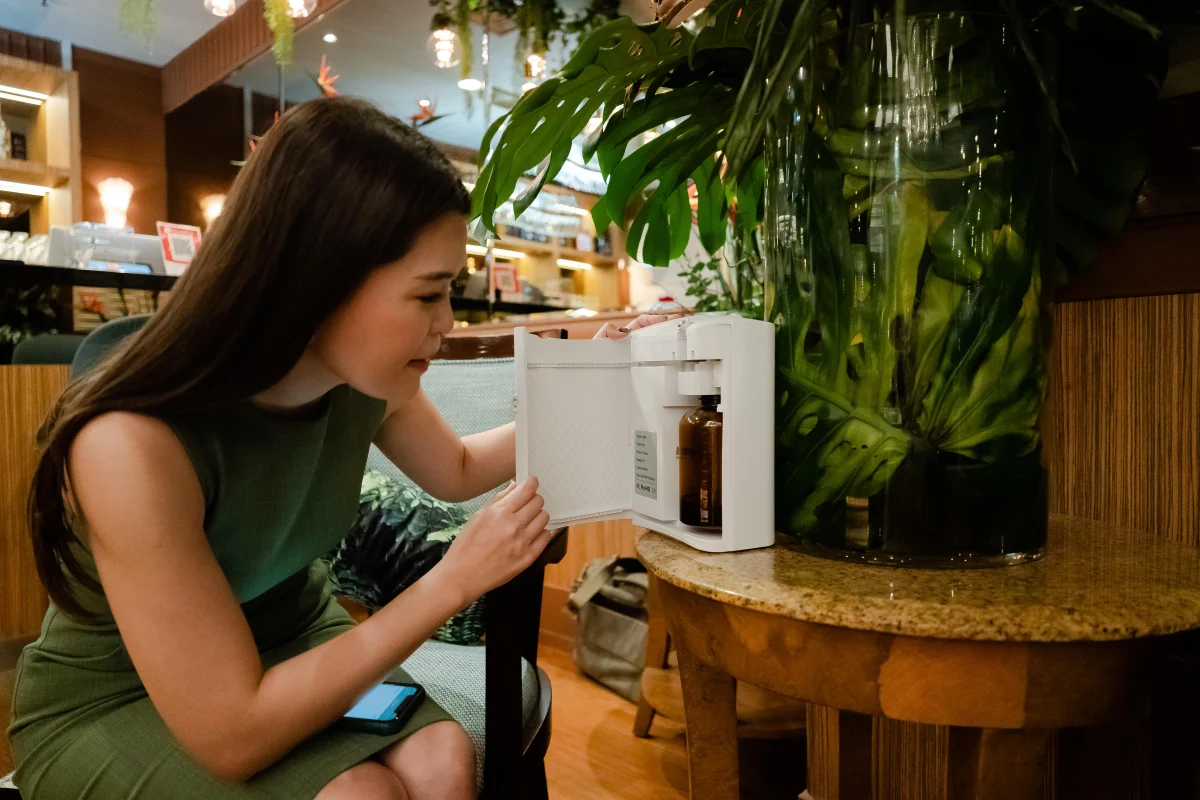
Servicing keeps a scent machine delivering the same output week after week. It typically covers checking the unit, replacing filters where the machine uses them and refilling fragrance oil. At MScents, the commercial scenting service includes a leased machine, installation, a warranty, filter replacement and servicing, so less of the upkeep falls to your team. Our guide on how equipment leasing works explains the structure and cost.
Two questions belong in any servicing agreement. Who refills the diffuser oils, and how often? And what happens between visits if a unit stops working? Ask for both answers in writing. Refills should also match the machine, because fragrance oils are not always interchangeable between machine types. Check the manufacturer’s guide or ask the supplier before you buy.
A fixed interval for every building does not exist. The right schedule depends on the machine, the room size, and how many people pass through.
You can add the scent machine to the maintenance calendar you already keep for air-conditioning, since facilities teams are already used to scheduled checks.
What should property teams ask before installation?
Before installation, ask four things: where each unit will go and why, who services it and how often, which oils it uses and who supplies them, and what the warranty covers. Get the answers in writing, then trial one area before you scent the whole building.
Before a full rollout, trial the scent in the intended space to assess how it performs under actual operating conditions. A trial also shows you what a floor plan cannot: how the scent behaves when the doors open and the lobby fills.
Talk to us about your building
If you manage a lobby, shopping floor or office and want to plan placement and servicing before you commit, contact our team. Send us the floor area, the ceiling height and the areas you want scented, and we will reply with the next steps.
Frequently Asked Questions
How do I check that the scent is even across the lobby?
Walk the route from the entrance to the far end at a quiet hour and a busy hour, and note where the scent is strongest and faintest. Fix placement before you change fragrance strength, because moving a unit often solves what a stronger setting only hides.
Should the unit run all day?
Ask the installer whether the machine can be timed to your building hours. Running it when nobody is in the space uses fragrance without any benefit.
What should I do if tenants say the scent is too strong?
Record where and when they notice it, then check placement and strength before anything else. The 2020 meta-analysis found nonlinear effects of perceived scent concentration, so a stronger setting does not necessarily produce a better response. If tenants find the scent too strong, lowering the setting is a reasonable first step.
Who should attend the site visit?
Bring the property manager, your air-conditioning contractor and the installer together. Placement depends on all three: how people use the space, how the air moves and how the unit works.
Will a scent machine interfere with our building’s air-conditioning?
A standalone unit does not connect directly to the air-conditioning ductwork, but airflow from the system can affect how the scent spreads. A unit connected to the ducting forms part of the air-conditioning setup. Either way, agree on the position with your ACMV contractor before installation.